The Plastic Problem
Somewhere between the supermarket shelf to the shoreline... Something went wrong.

Act | - Paradise?
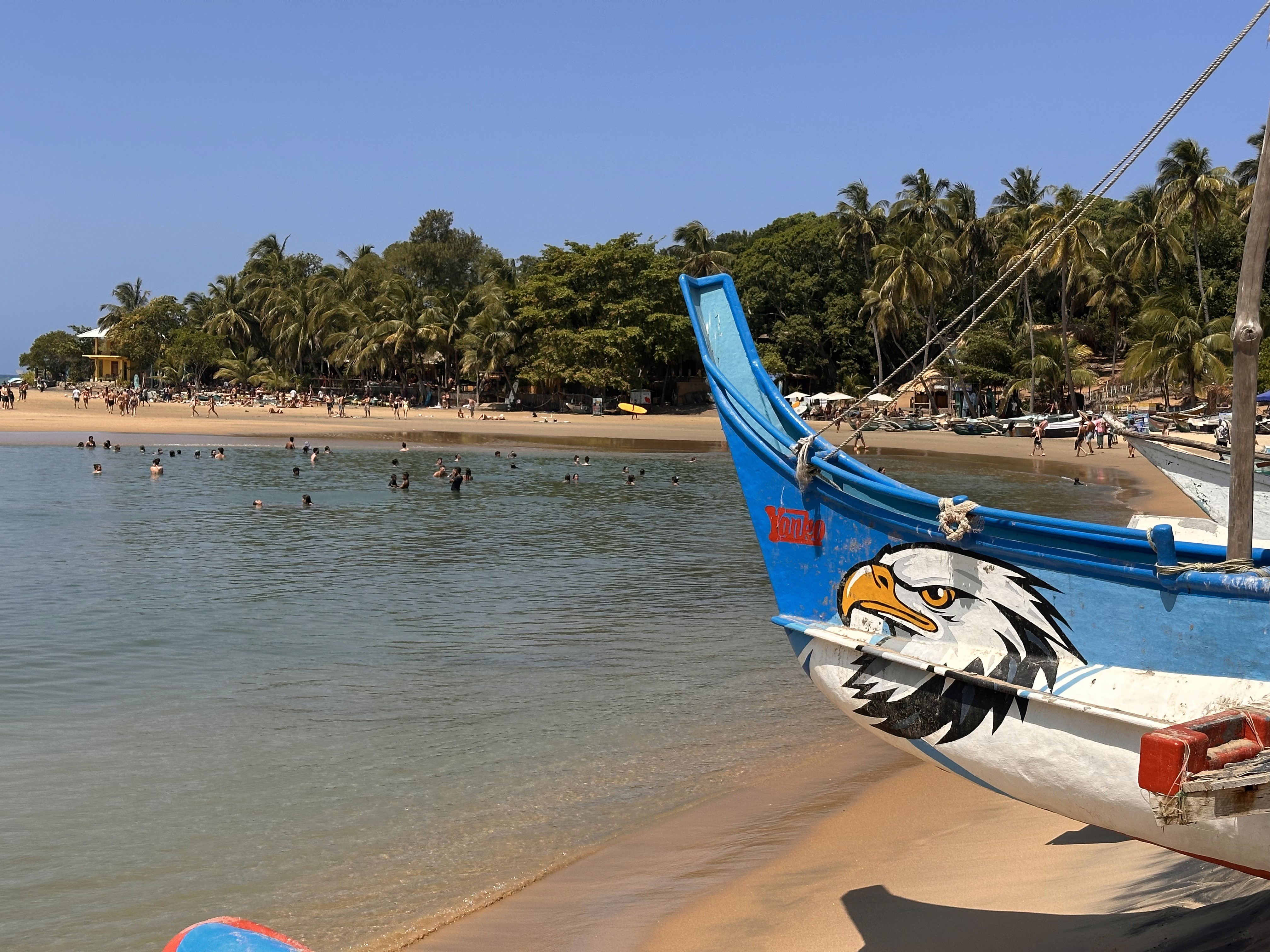
The Inconspicuous teardrop falling from cheek of India's coastline, Sri Lanka, is the ethereal island life many of us yearn for. Many becoming 2.36 million tourists annually as of 2025, the tranquil oasis has undergone a concerning haphazard evolution to adapt to these ever changing conditions. From the turquoise seas to the luscious trees, its hard to find a fault from Sri Lanka alone. Since 1960, when they became the world's first country to elect a female prime minister, Sri Lanka have always worn their strong traditional Buddhist social freedom beliefs on there sleeve; which is still predominant over 60 years later.
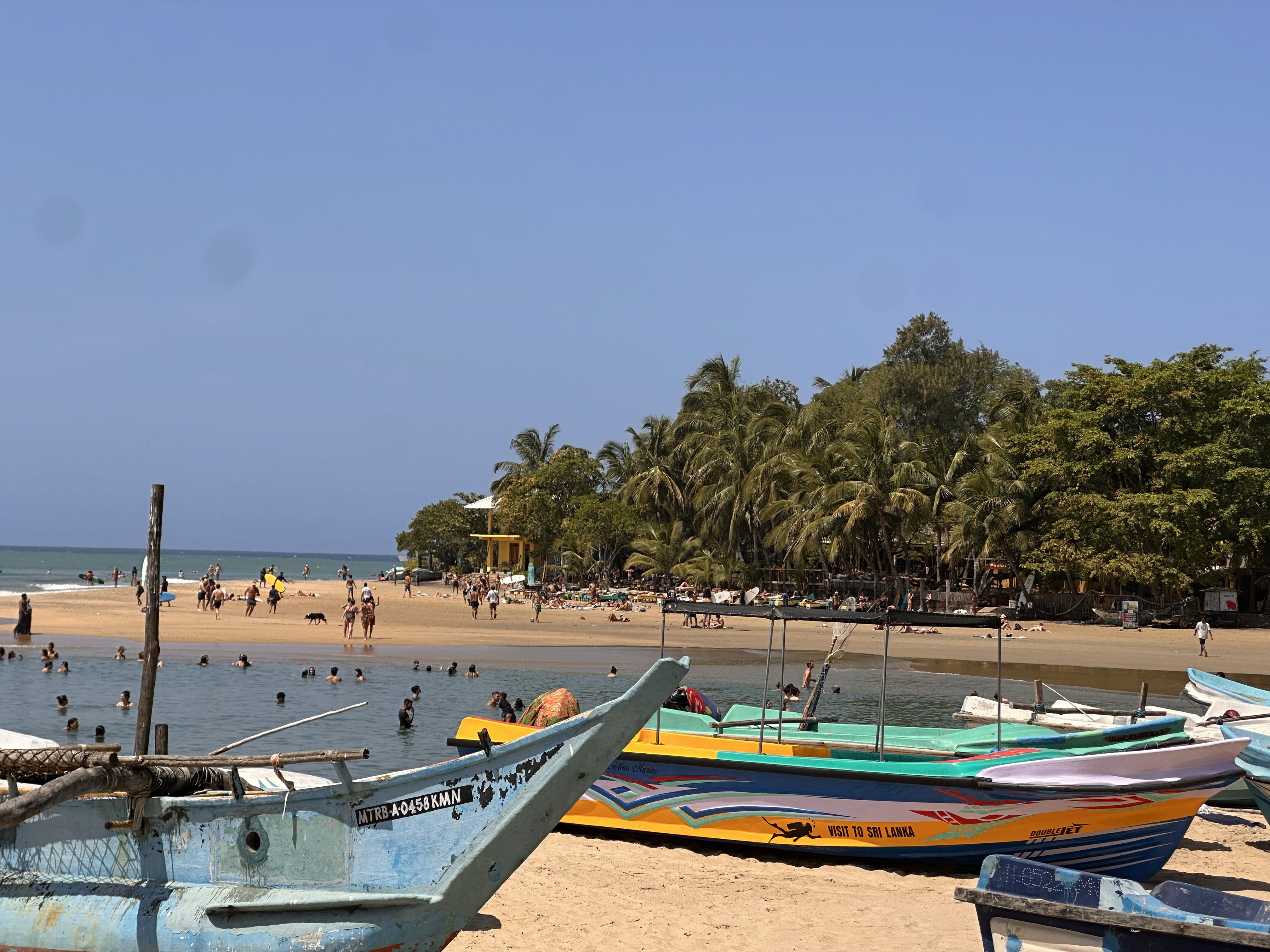
But as with everything, its not as surreal as one may be led to believe. Travelling through the many villages up the east coast: Okanda, Arugam bay, Pottuvil town, Komari and Sangaman Kanda in search of the perfect wave; every sunrise or sunset that swallowed my heart seemed to be spoiled by the same taint of human interference.
Plastic.
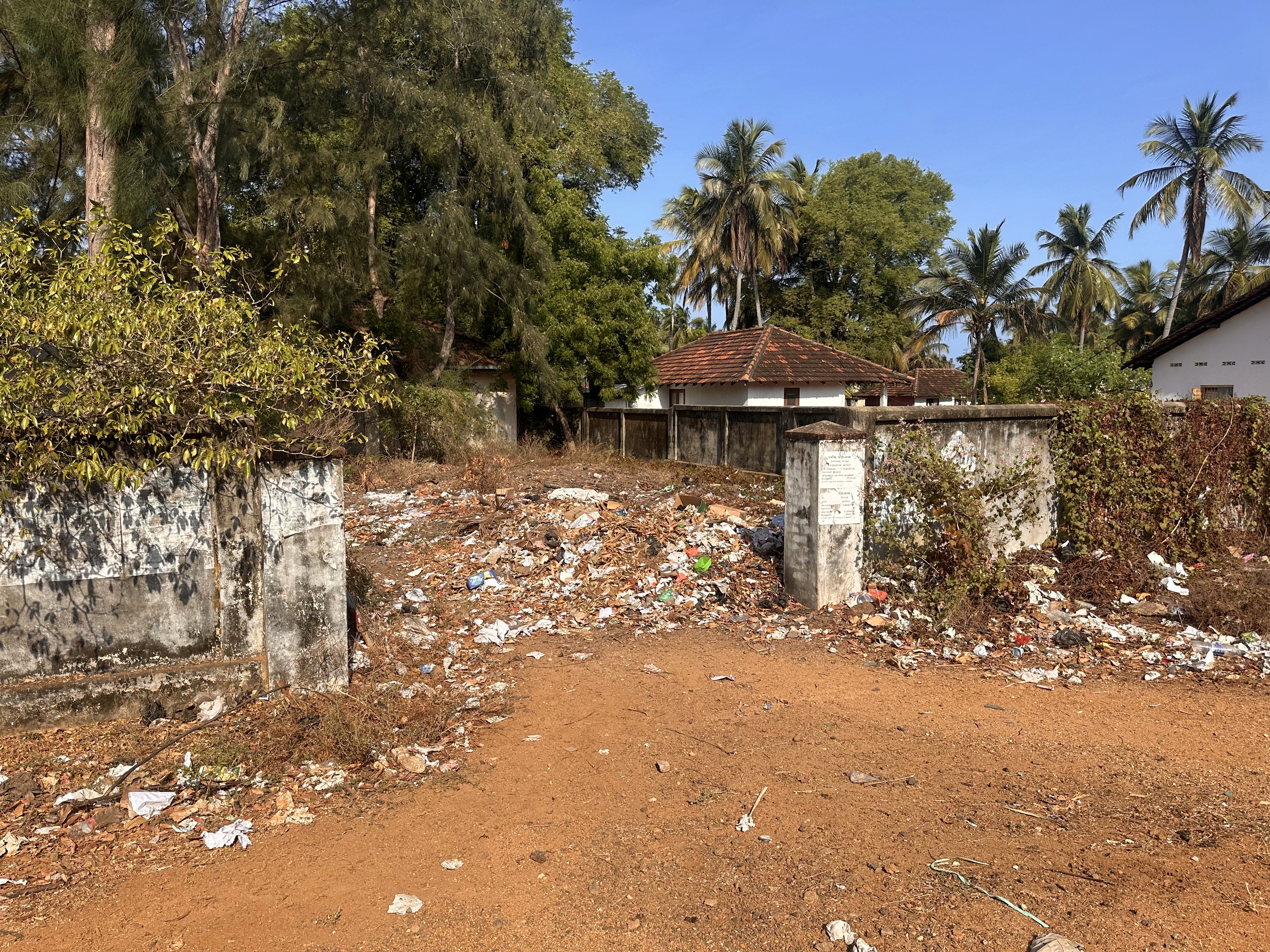
From bottles to barrels, cans to containers, it is everywhere. Sri Lanka produces 250,000 tons of plastic waste annually with 70% unmanaged waste and only 11% recycled. Making themselves among the top five countries per capita contributors to ocean plastic pollution, making its voyage via rivers, canals, floods and deliberate coastal dumping.
Somewhere between the supermarket shelf to the shoreline... Something went wrong.


Act || - Beneath the clouds
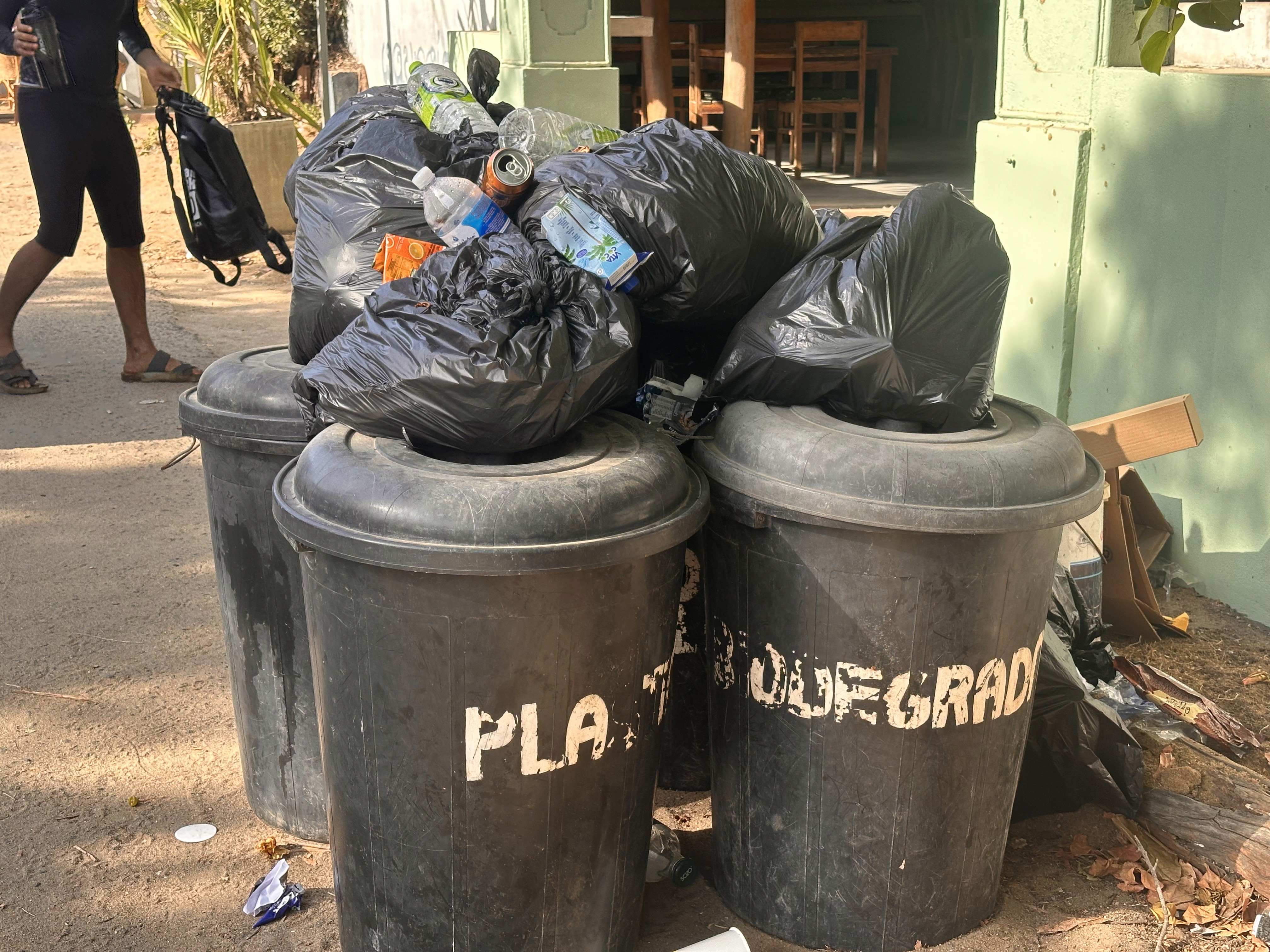
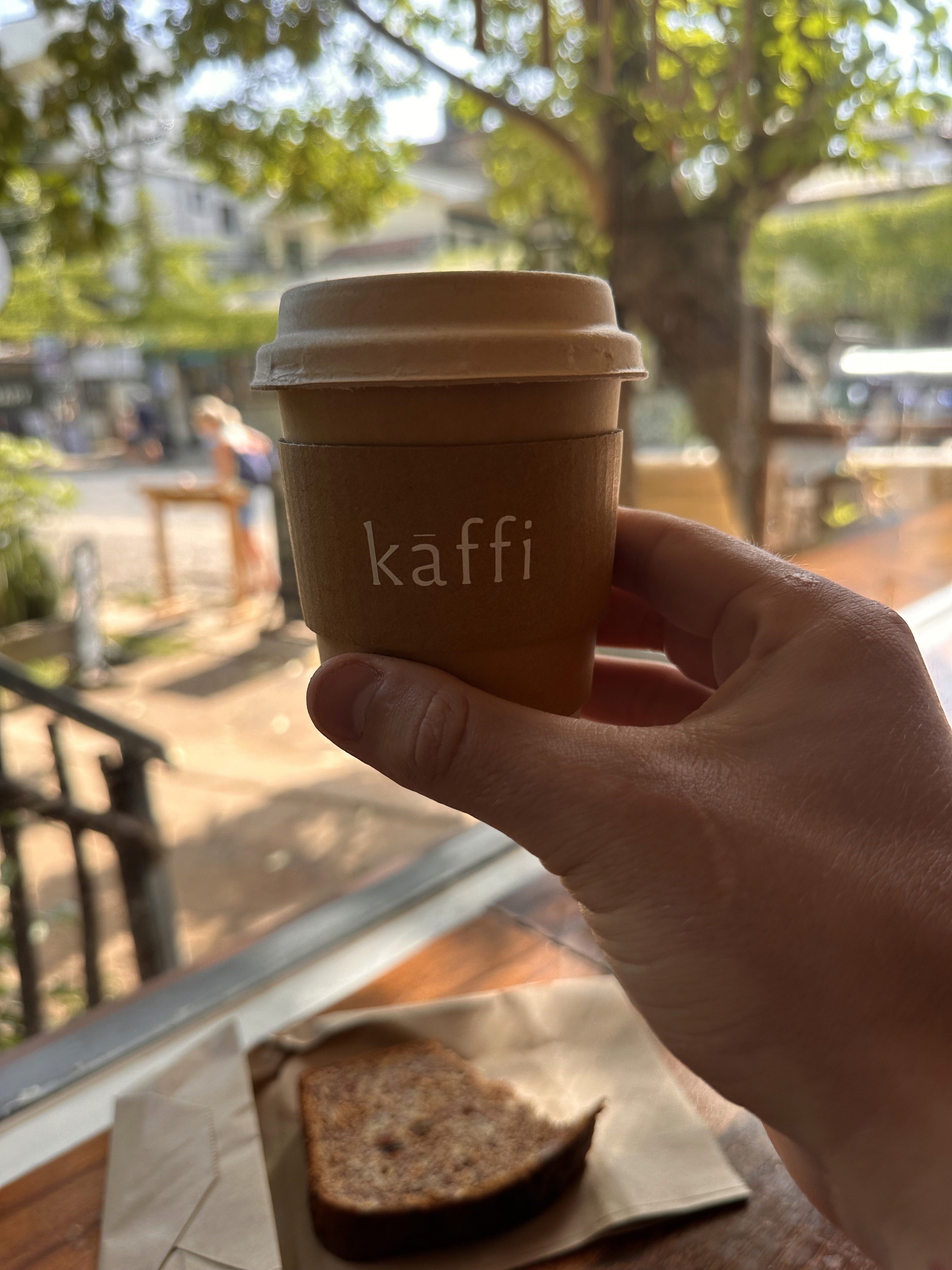
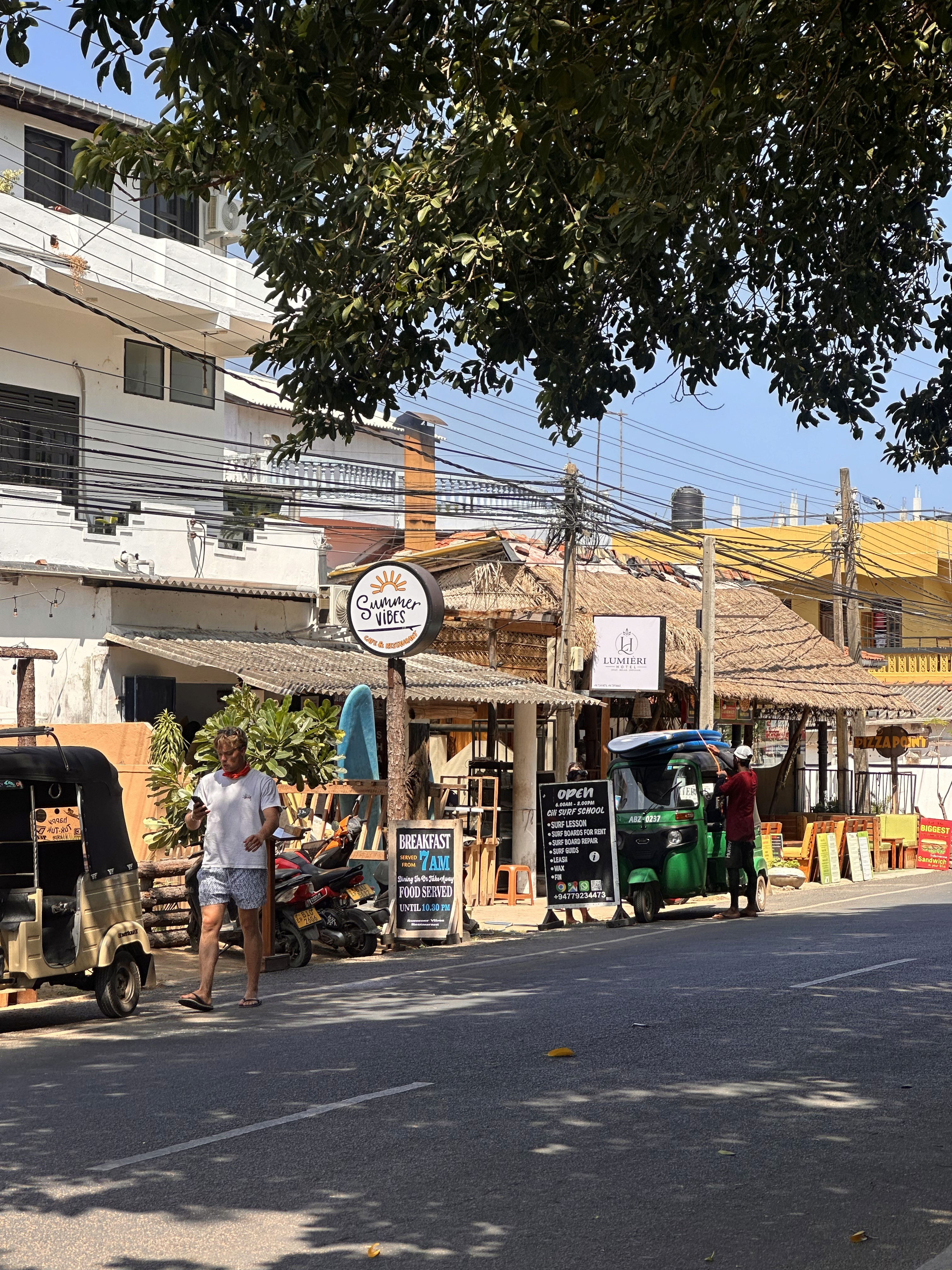
The smell of roasted coffee pulled me into a sweet looking garden café, Kaffí. With my scent hooked I Looked out onto Panama Road ,the main strip of Arugan Bay, my eyes became likewise. Along with many other Europeans, seeking refuge from the unwavering Sri Lankan sun in one of the several AC-pumped western style cafés Arugam bay hosts. The flip-flop wearing, sun-kissed bearing and matcha sharing life here is one all to difficult to resist. But alas, human reality rears its head through these rose tinted glasses we all wear. Piles of humming trash bags piled up against the bistro, as if a if a part of the store's supporting structure. Taking the matter to Rajie the barista at Kaffí, originally from Colombo the capital, went on to tell me how:
"It's very hard to deal with this amount of tourists, you know. That's that's the main issue I find. ... Some plastic recyclable... but a lot of it even if it is recyclable, it still goes in the trash."
Since the 90's, Arugam bay, is one of the most visited places in Sri Lanka outside Colombo for it's laid back atmosphere and world class surfing it obtains, with over 3,000 tourists at any one time during peak season (June - October) and less than a few dozen during the low season of (November - March) they are no stranger to the rapid boom and bust economy tourism brings to many unsuspecting less-developed countries, along with the unending issue that stem from it...
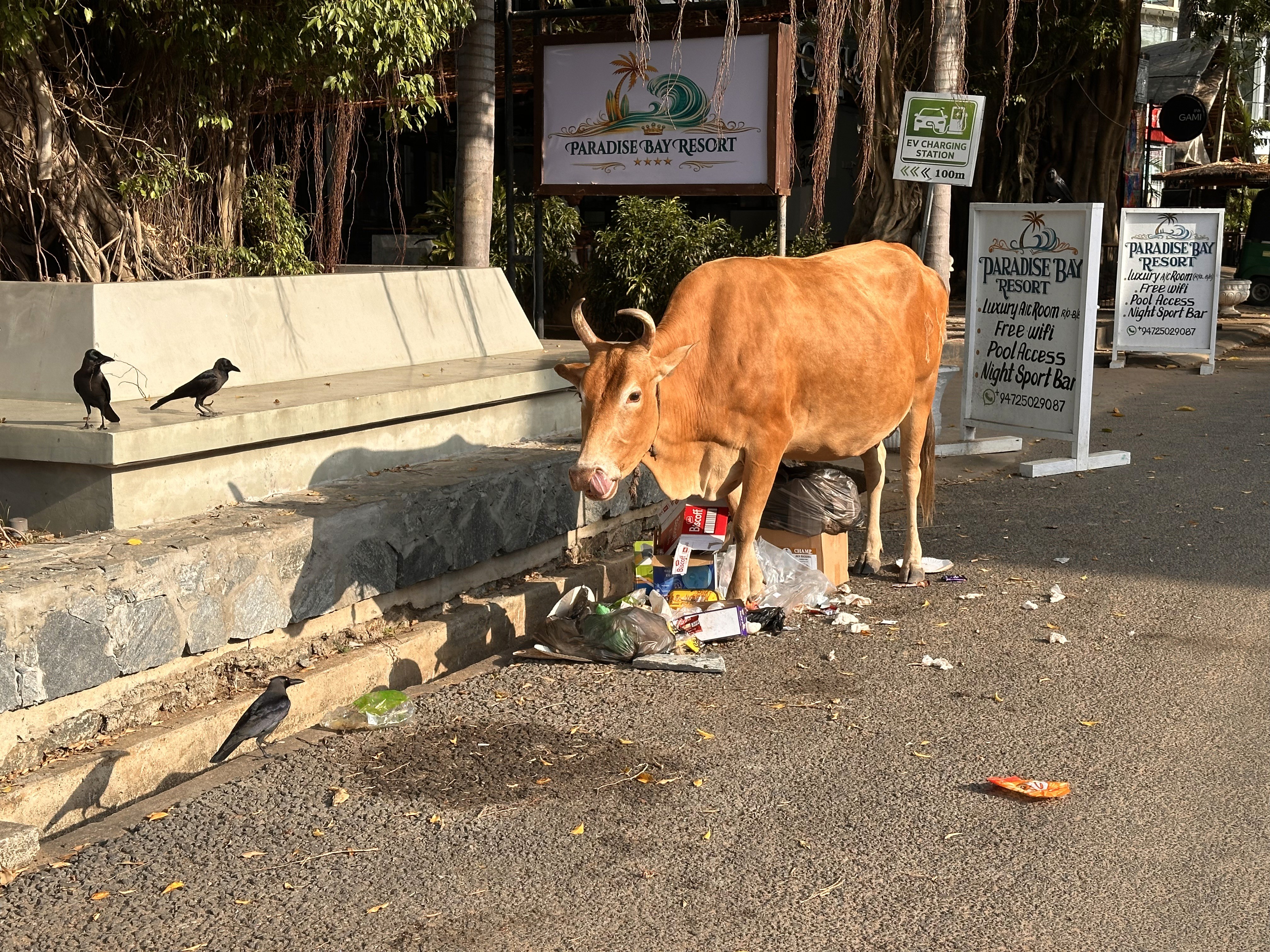
Stepping out, the sounds of swerving surfboard-mounted mopeds and guides whistling for your precious attention filled my ears. Regardless of the absorbing presence of Arugam bay and it daily bustle, I couldn't help but allow the amount of waste and plastic on the roadside steal the moment. I exercised one of the few bins and threw my empty Kaffí cup, expecting a safe waste procedure to follow. While we dined in the restaurants: the cows, dogs, monkeys, goats feasted on an endless buffet, street side.
Act || - Beneath the clouds
As I sat with Johanne Paiva, a 23 year-old waiter at Waypoint hostel, I couldn't help but admire his unquivering smile and laughter as he spoke of the deep power struggles, conflicts and anarchy his nation has faced over the past 43 years.
Stepping back to 1983, Sri Lanka plunged into 26 years of civil war and social unrest. Diverting attention from public infrastructure development to military operations and national defence. Coming forward now to 2009, after a bloody victory over the Tamil Tigers, peace returned apprehensively to the once war-torn nation. Acting as an invitation to tourists, the counties tourism sector boomed under the government funded campaign titled 'Sri Lanka, the wonder of Asia'.
Grossing an annual revenue of US$350 Million to US$4.38 Billion from 2009 to 2018 from the tourism sector alone, putting into perspective the sheer amount of economic stimulation through hotels, cafes, restaurants along with the consumable imports to match the twelve-fold growth the country received in those short 9 years. Providing the perfect golden umbrella to recover from the past 2 decades of devastating conflict; it came with its adversities they still face to the present year. With an increase from 447,890 to 2.33million foreign mouths to feed annually within those same years, the repercussions speak volumes; in the form of waste.
Following on shorty from this profitable boom, in came multiple busts...
"Sri Lanka is very unstable economy." Johanne began to tell me,
*"Constantly being hit with adversities: the civil war up until 2009, the Meethotamulla dump collapse in 2017, the 2019 Easter bombings in Colombo, the Covid-19 pandemic, the economic collapse in 2022, now the Middle East war".
Stating how this chain of events has created a persistently unstable platform for Sri Lanka's tourism sector, stopping the chance of grow in a sustainable manner. He notes these events have:
"many time disincentivise tourists in visiting Sri Lanka", halting a stable investment into the country.
Due to these many limiting factors, it could begin to explain how Arugam bay has struggled to provide adequate waste management systems, sustainable supply chains for local businesses and regulations over the tourism it receives. Which I had the pleasure of talking to Jenicca about, a fisherman who has lived in Arugam bay for the past 31 years.
Act || - Beneath the clouds
Fishin’ for favours
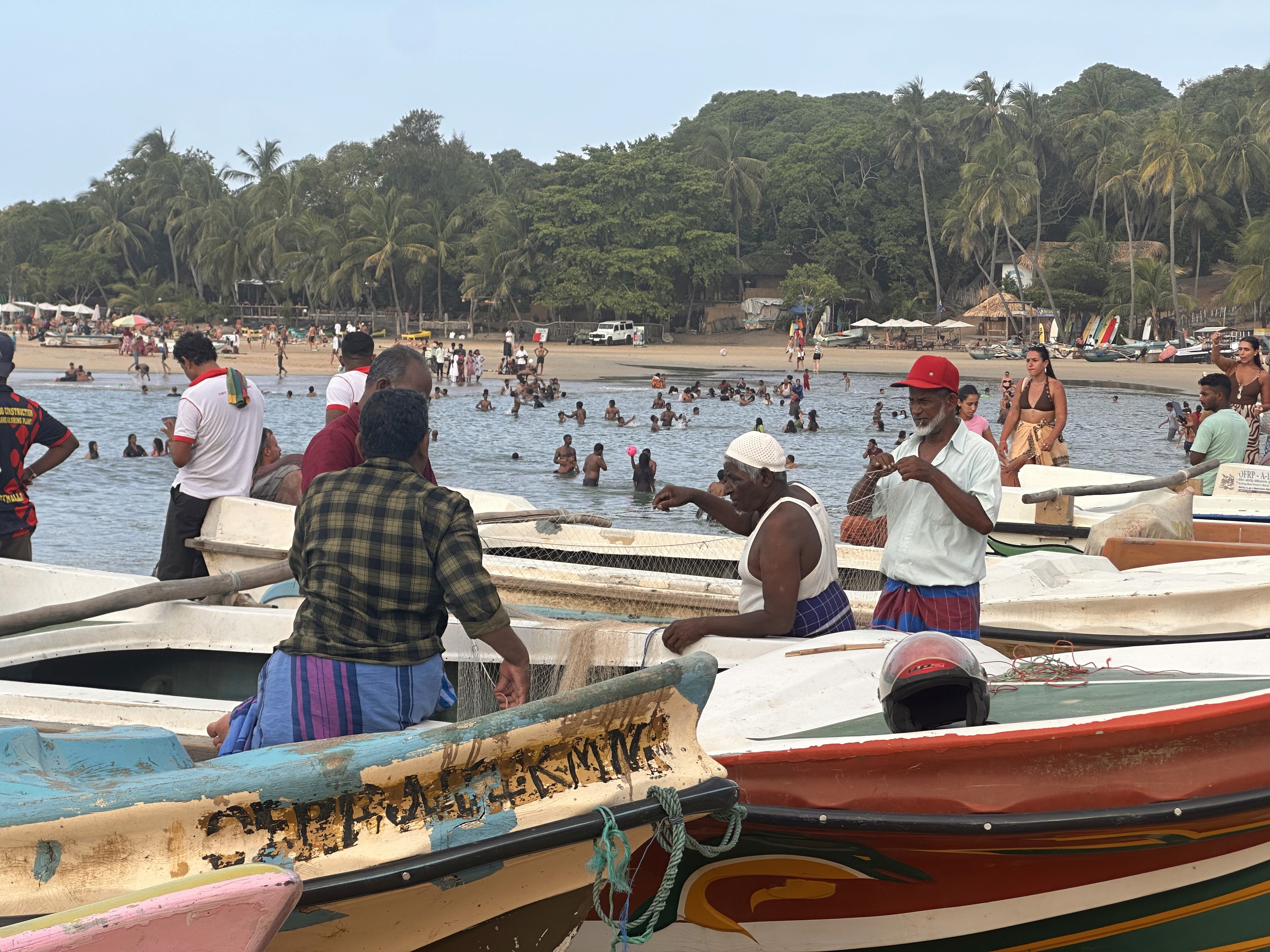
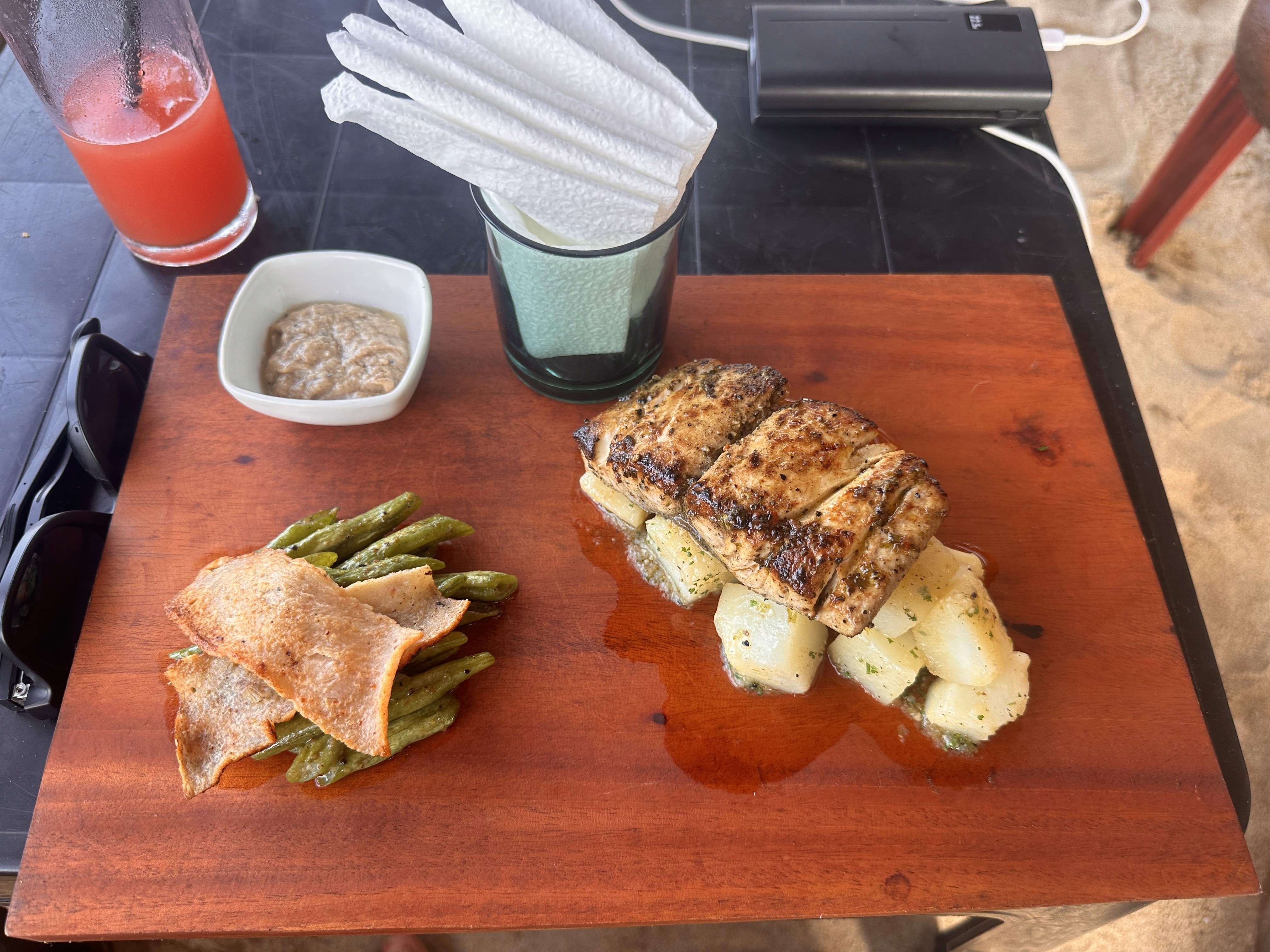
The sea breeze, offered a moment of bliss from the hot and humid equatorial climate of Sri Lanka; carrying the smells of the freshly caught snapper, barracuda and yellow fin tuna by the fishermen just next door. Taking a seat under the woven coconut palm shade of Lucky Tuna's Café, the owner Jenicca sat to talk with me as I feasted on the fresh Mahi mahi he had prepared for me, caught this morning. Jenicca has lived in Arugam bay for the last 31 years, seeing every trial and tribulation the fishing industry has undergone.
On the topic of plastic in Arugam bay waters, Jenicca stresses:
"The fishermen, they don't care... because they are not educated. Most of them they can't write".
It becomes apparent this is due to civil war that ended 18 years ago but the effects still echo through the locals in the heavily affected areas such as Arugam bay and Pottuvil Town. Continuing to note:
*"In this area they had like 30 years of war up and down... they did not go to school...they didn't have one."
Driving a fair argument with the locals, after all:
"How we can explain to them? All the life they was living like this. The same conditions and that's why it's not easy, even for the new generation."
With the fishing industry supplying 60% of the countries animal protein intake, having ghost nets blocking propellers, fish ingesting micro plastics and Sri Lankan fishing harbours finding plastic accounted for around 85% of all debris collected; they are hardly the ideal circumstances in the nation's already highly in demand fishing industry.
An interesting matter was said in that the situation in the East is:"not like in the south or west of Sri Lanka. I'm talking about the civilisation... there's more over there". Suggesting The East of Sri Lanka is relatively isolated and left alone to rebuild itself after the perpetual challenges it faces.
Continuing how the South has better-established "rules and regulations for tourism and professionally, whereas in Arugam Bay, the industry is more chaotic and focused on dirty money."
With a full belly of garlic buttered Mahi Mahi, Jenicca pushed the point that "education is the fundamental missing link" in addressing the Sri Lanka's plastic crisis:
*"The government should take care of the people through the schools and inform them about clean oceans and about the importance of nature before it is destroyed".
Many say we tend hurt the people closest to us most, seems like mother nature is not excluded from this analogy.
Act || - Beneath the clouds
A tale of two cities
I made a meek attempt of filtering the dust plumes with my hand as the countless busses and lorries rumbled past us. The sun bleached colours of the store fronts spoke volumes of the differences between there slick neighbour across the water, Arugam bay. Pottuvil Town sits just up the coast on the boundary of the 'tourism zone' and that juxtaposition is seen in every sense.
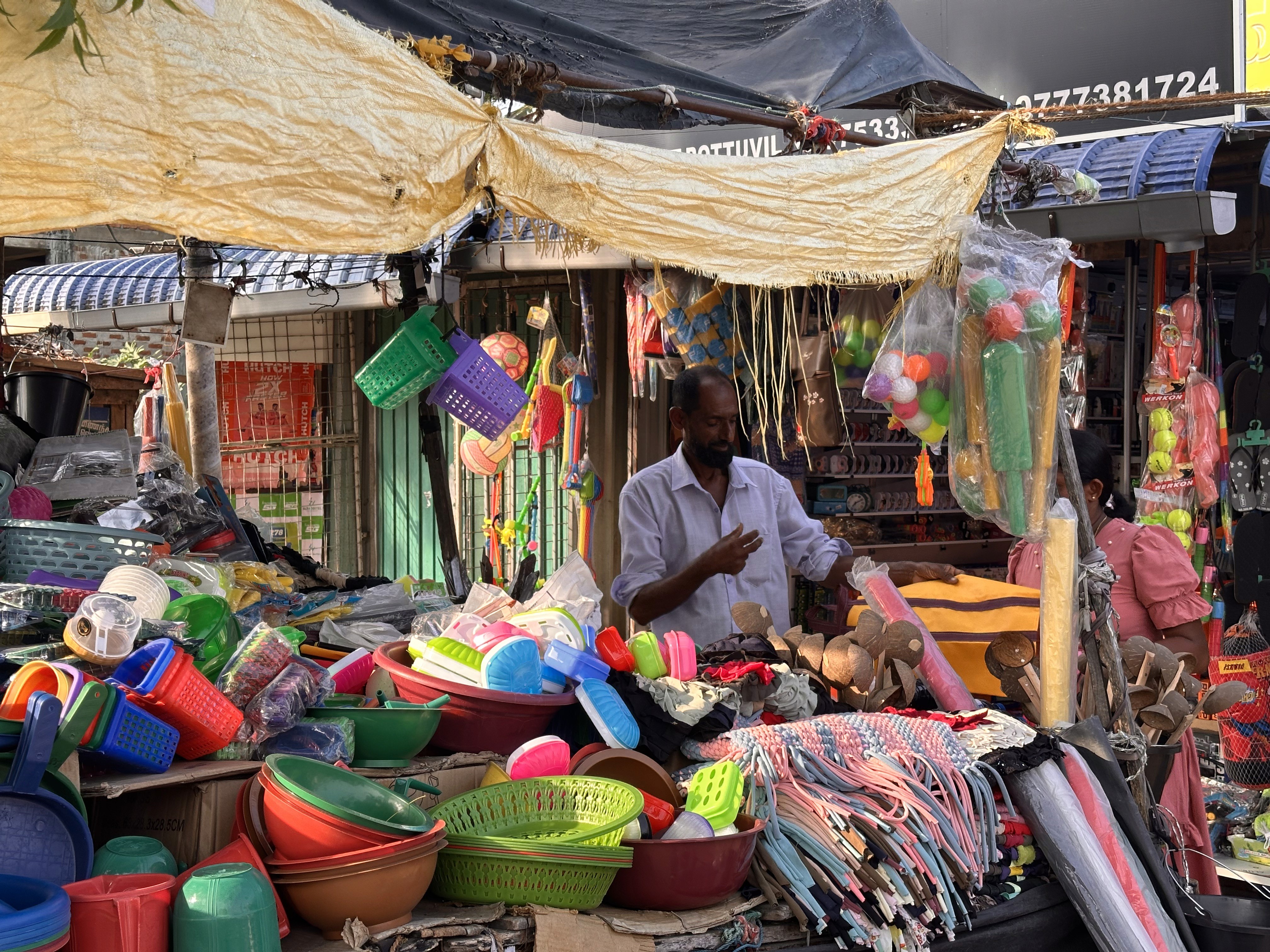
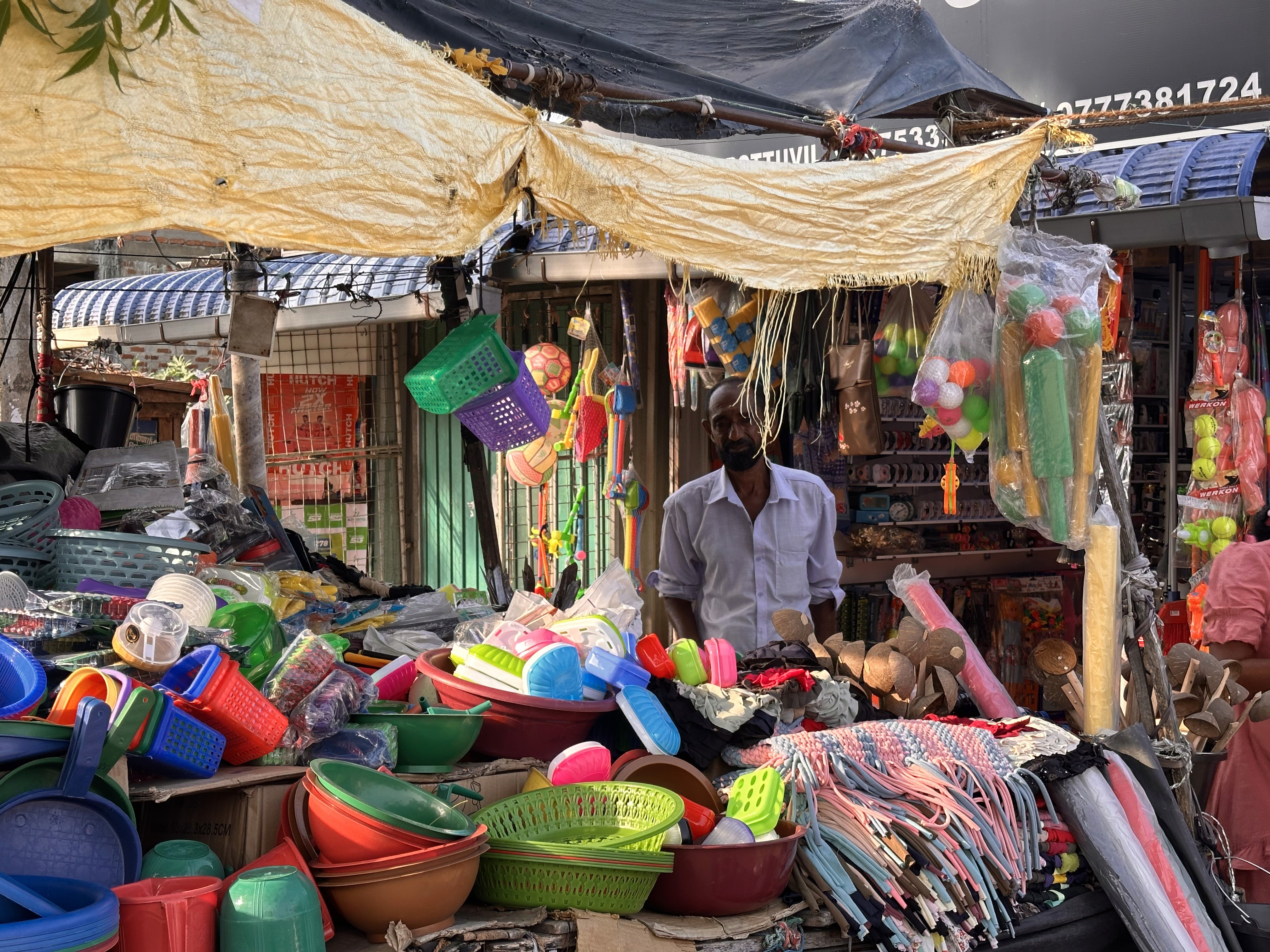
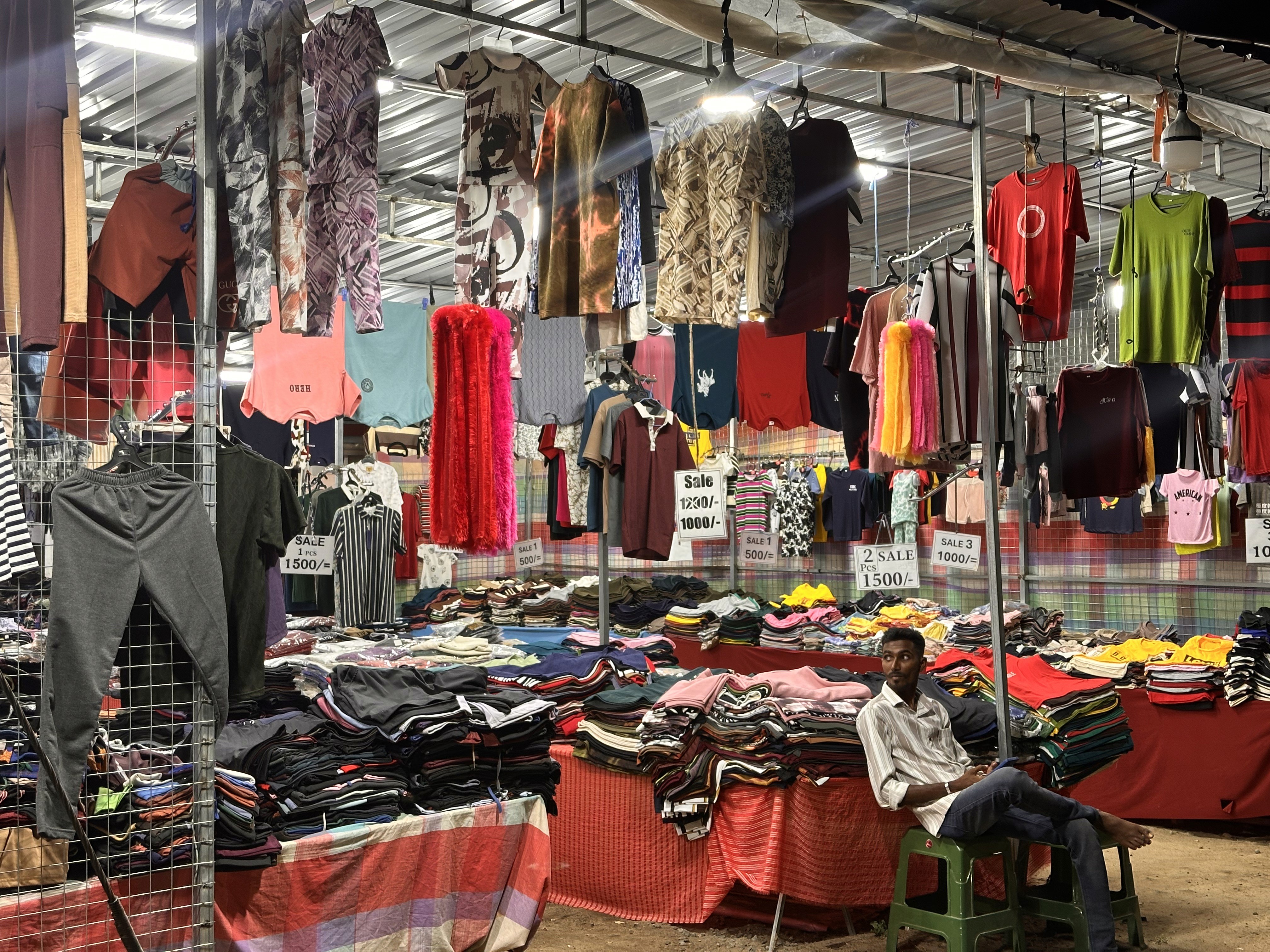
Saris and sarongs fill the small space between speeding trucks and store fronts, the aromas of spices entangle you into their world. With the Arugam Lagoon bridge joining the two towns, the flip-flop and granola paradise is stripped away to its roots. Teaming with day to day life, locals bargain and barter at the street side fresh fruit and fish stands and at the bazaar's packed to the rafters of cloths, appliances and cosmetics. I sat down with Dashat, 33 years old originally from Hikkaduwa, worker as a waiter at Bambino's restaurant on that very high street.
"Arugam Bay mainly starts over the bridge..." ,Dashat begun, "Past the bridge is completely different... No trees. Only concrete buildings, the outlook has completely changed... Before they had natural items, houses made by coconut palm... now concrete. It’s not good."
but.
"Arugam bay is a valuable place for Pottuvil because the market is running because of Arugam. Every small shop to big shops, there business runs with Arugam bay and therefore, everyone has to protect Arugam"
With 181 hotels listed online, serving over 3,000 visitors daily during peak season, the market for fresh fruit and fish, bottled water, fuel is in high demand in the area. It seems while Arugam bay attracts the crowd, Pottuvil town provides the catering. Although, this catering comes at a cost: with pipe-borne water only available a hour a day, the engine is running on fumes, the commercial waste generated by the Bay's 181 hotels is now double that of the entire local 15,177 households in the wider area.
The investigation, 'Arugam Bay Tourism Development Master Plan' (TDMP), back from February 2020, talks heavily on the requirements Arugam bay needs for the decade between 2020-2030 to stay fully operational. With the Pottuvil area generating 15 metric tons (MT) of waste daily, but the council only managing to collect 10 MT. This confirms that 33% of all waste is left to sit in the streets or wash into the lagoons, this waste being unusually high in plastic and polythene composition at 15%. With these staggering numbers in mind, I had to hear Dashat's, a local, point of view:
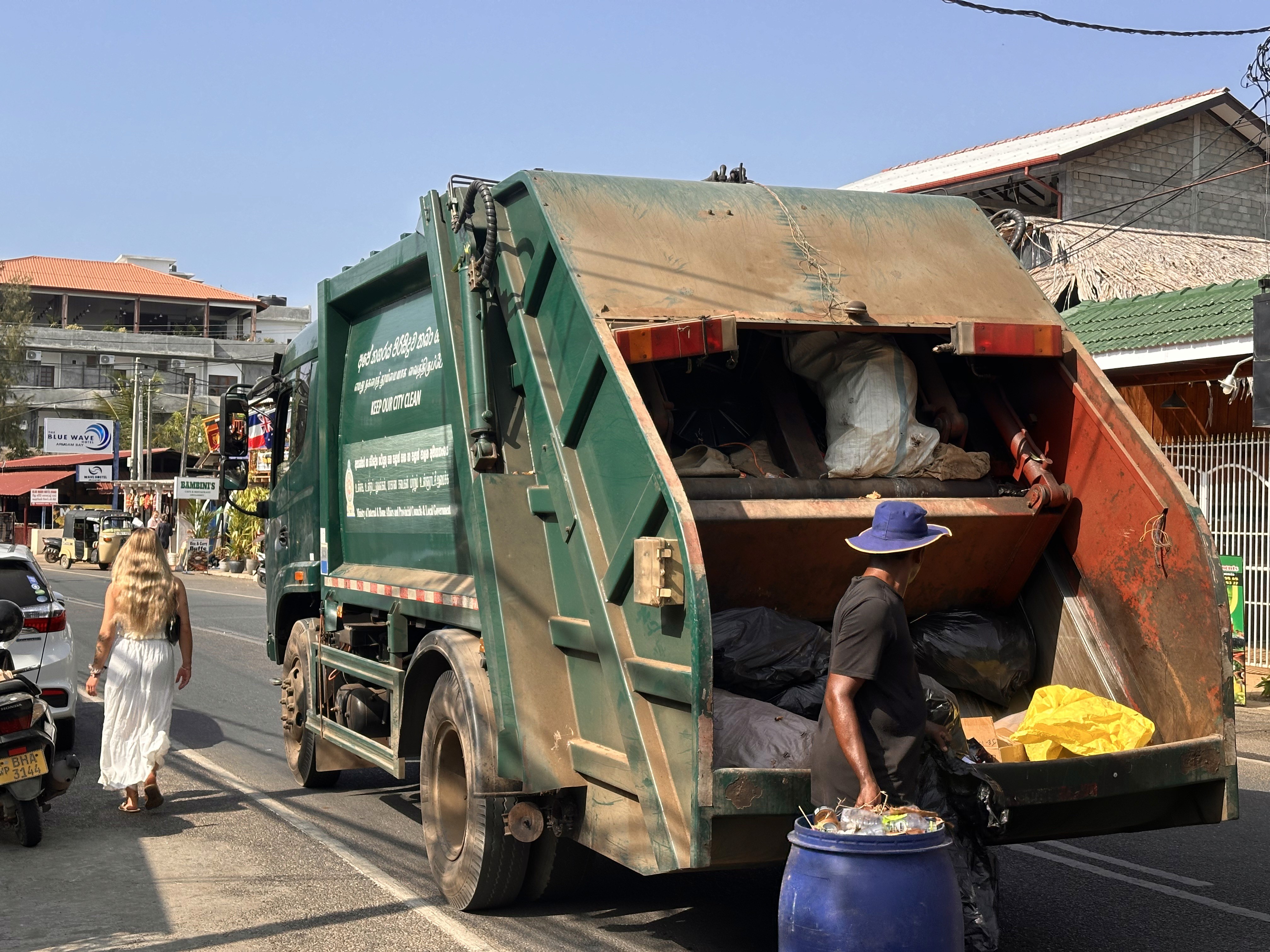
"At the end of the day we put the garbage bag near the road and in the morning comes the rubbish vehicle. Animals come to eat the trash filled with plastic. A lot of damage for the stomach, I think they must manage this rubbish plastic separate... food items separate"
But what struck me most, was something I heard from not only Dashat, but Johanne and Jenicca also:
"the council trucks... they do a bad job on purpose so the private owned ones get paid more" Continuing, "Many of us have to give a tip to the private trucks then they work very quickly and clean 100%". Along with Johann noting that private organisations often "dump it in random places, dig holes to bury it, or simply burn it".
This hit me as quite a shock, with Arugam being the only town in Sri Lanka to host 5 national parks, along with the country being one of the world's 36 biodiversity hotspots with nearly one-third of its flowering plants and around half of its vertebrate wildlife found no where else on earth; there is much more on the line than initially realised.
This left no choice but to see for myself the unspoken sacrifices we are making everyday.






Act ||| - Consequence
No pot of gold here
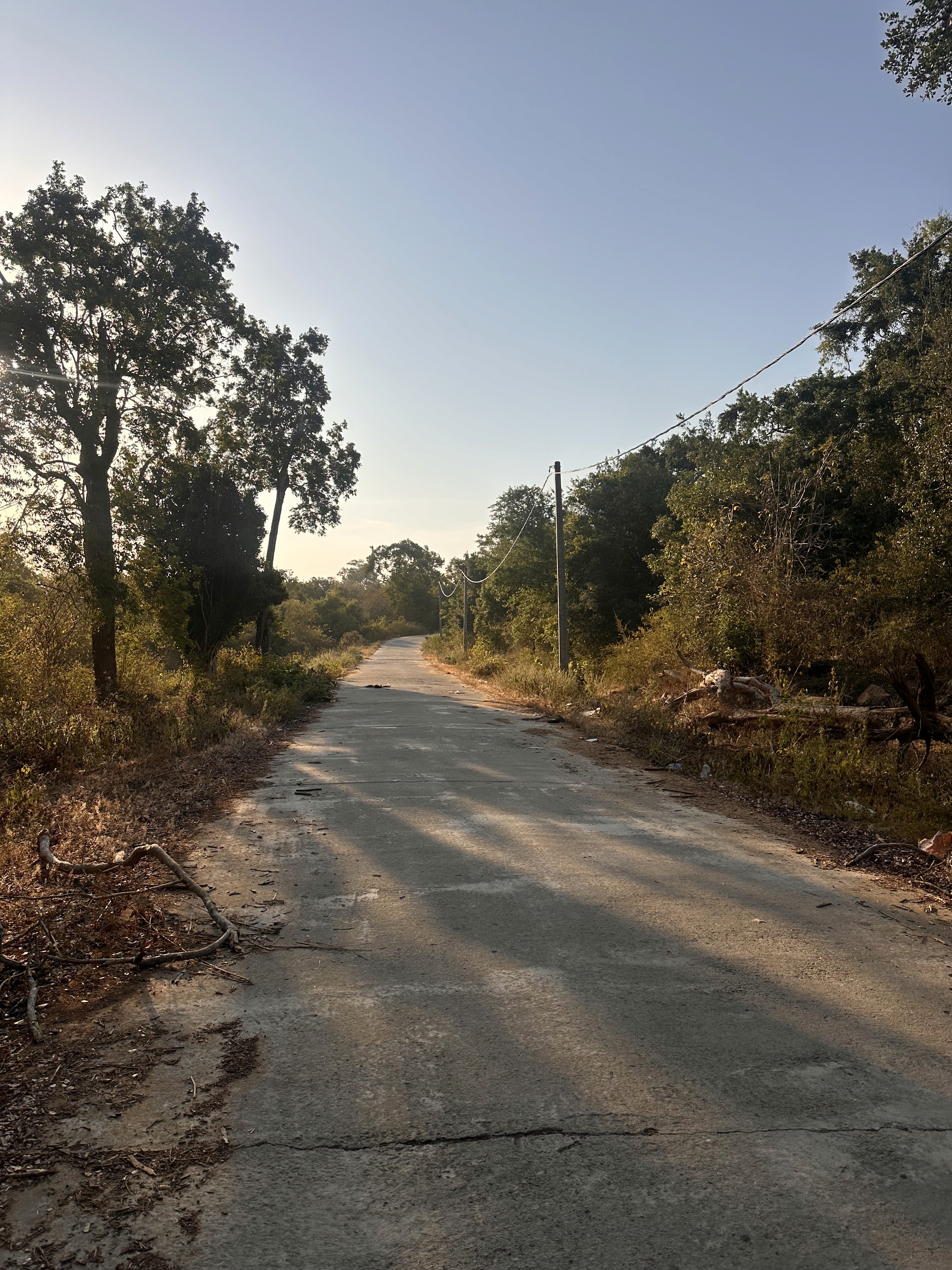
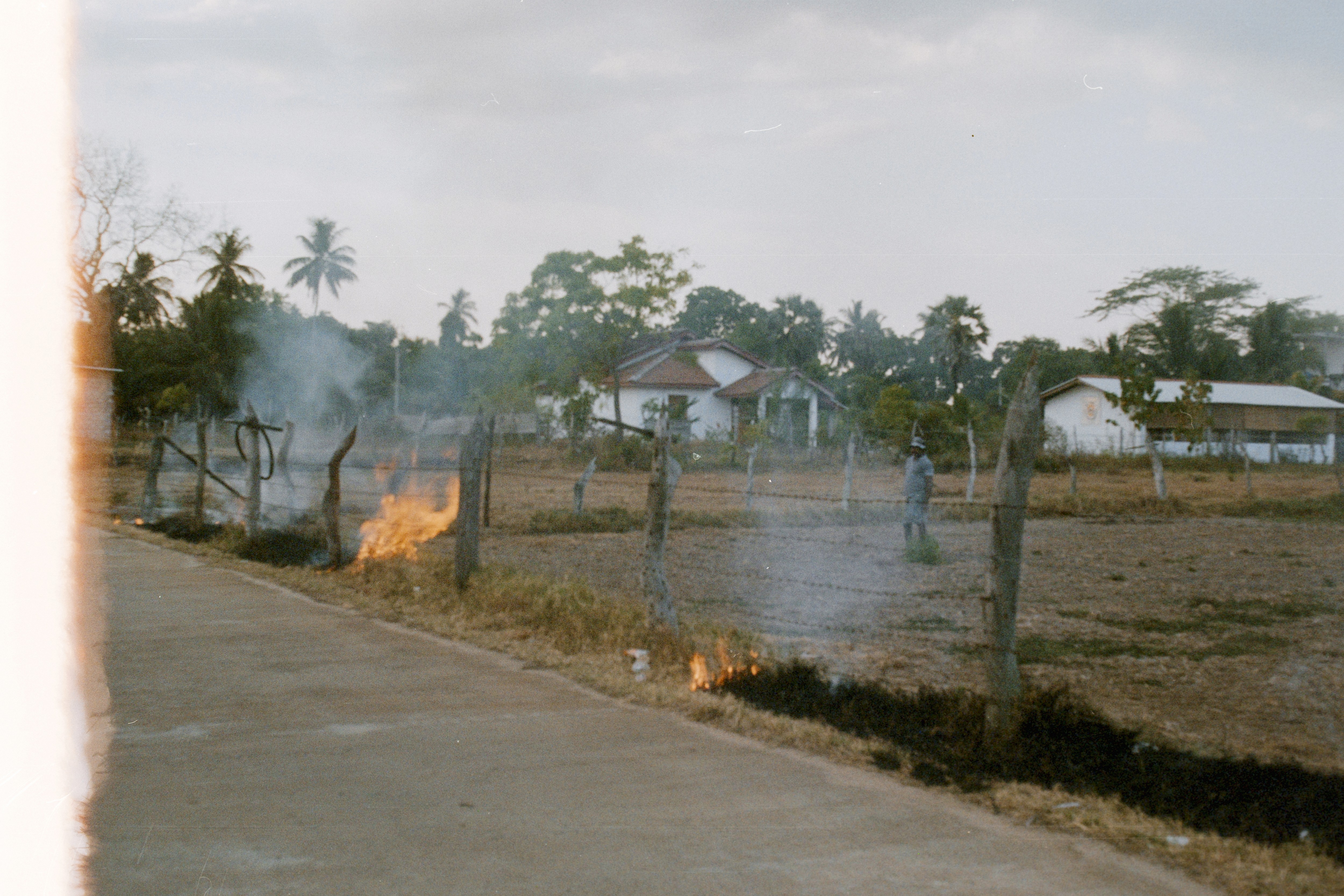
The lifeless concrete path blazed its way through the forest, slithering past the sparse local villages and cattle farms. Being the only prompt we are in the 21st century, it sloped off into the distance in its anomalous, alien manner. Only 4 kilometres outside Pottuvil town, electricity supply is sparse along with families relying off well water, . Reminders of the current year started to become all to common as I rounded the final corner of the serpent, in the form of smaller offspring like dump sites of the monster that waited for us at the end of this grey rainbow.
The Sarvodayapuram open dump.
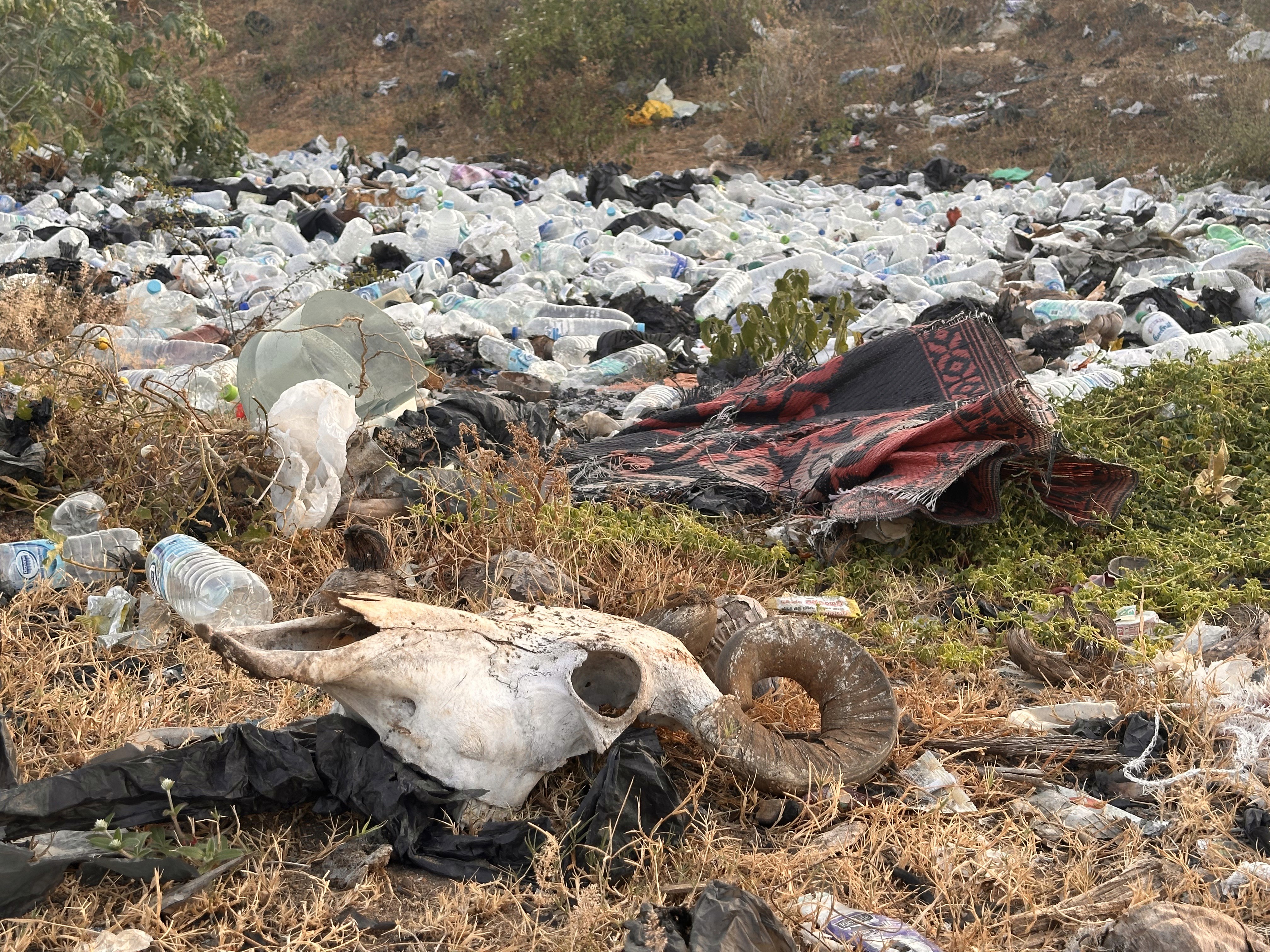
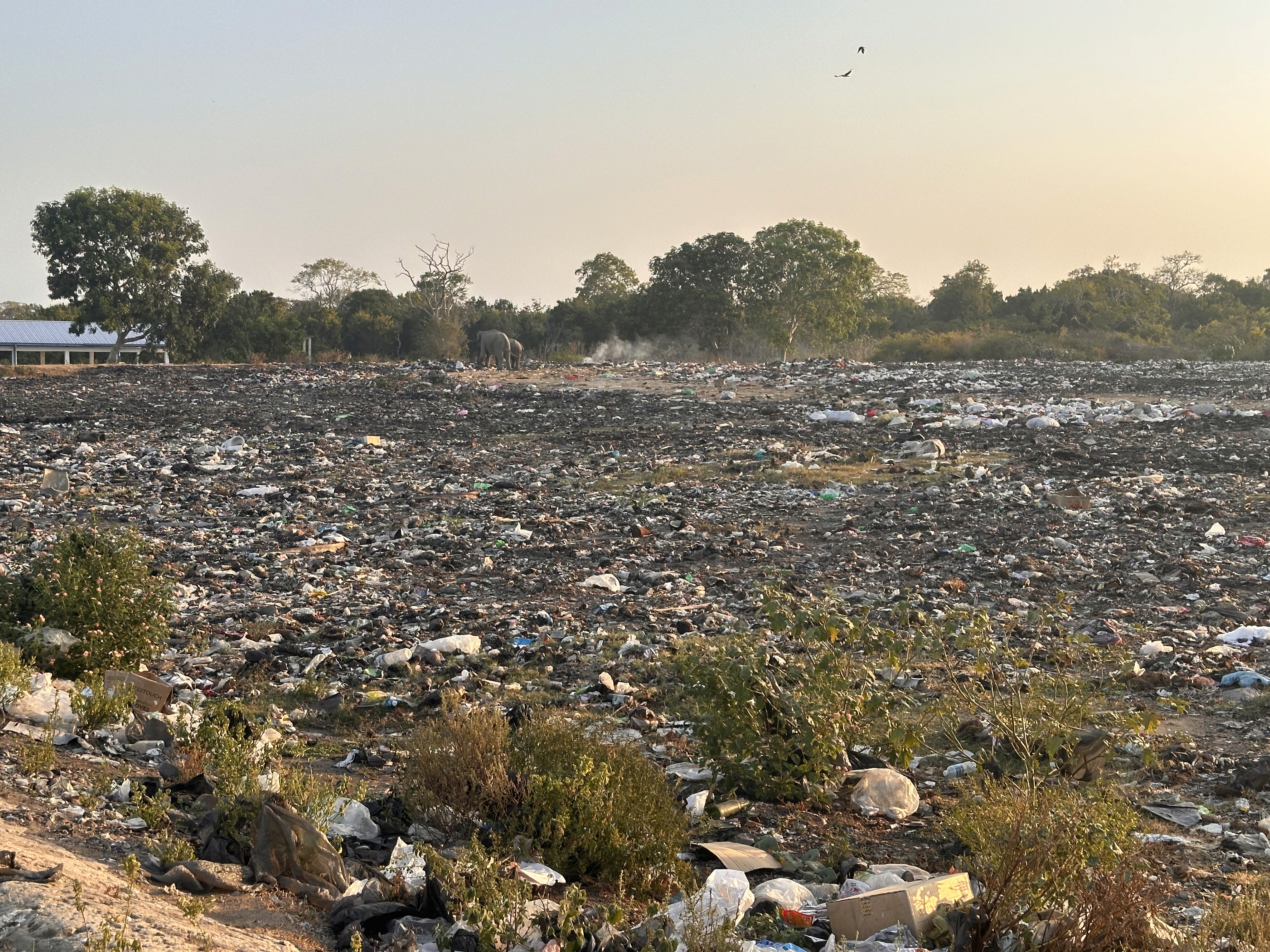
the hum of flies drowned my thoughts, if the shock didn't already. Covering 4 hectares of the Lahugala sanctuary, a vital wildlife corridor, the dump receives 7-10 metric tonnes of municipal waste every day from Arugam and Pottuvil town. Despite its sensitive location, official records indicate it is unclear if the site ever obtained an Environmental Protection License or underwent proper environmental assessments before opening.
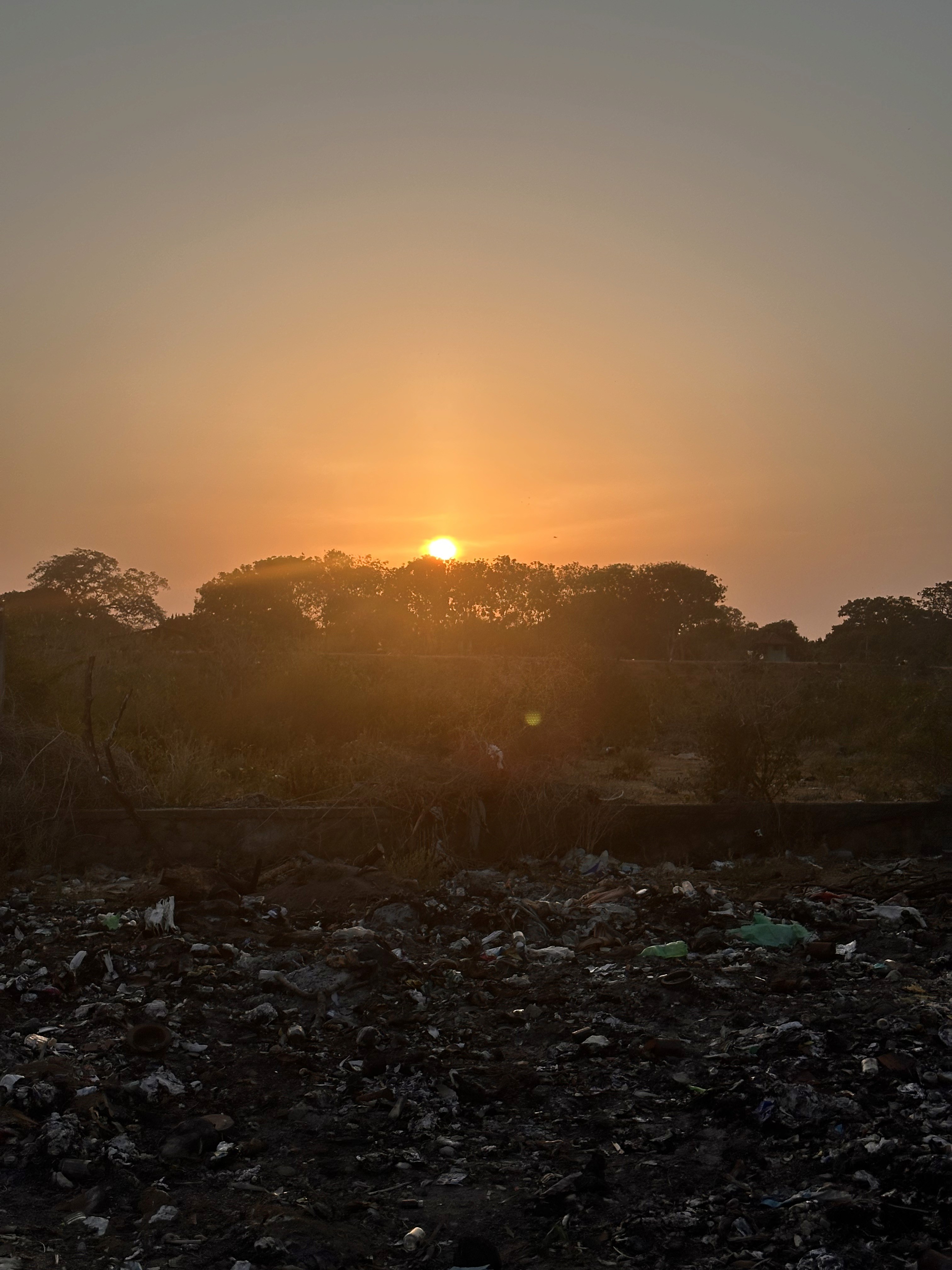
The eagles, crows and egrets circle overhead, as vultures on a rotting caucus. Feral monkeys and dogs scavenge through the mounds of trash. A pack of elephants graze the refuse on the grounds nearby, left locked into the upper segment of the dumpsite after attacking the workers. Sections of open burned trash piles smoke and ember into the wind, the shear decomposition heat emitted from the graveyard of consumption broke me into a sticky sweat. I look down to stumble on the exact same Kaffí coffee cup I sipped my flat white from only days before.
Act ||| - Consequence
Playing on Borrowed Ground
Talking with Jessie Stevens, a 40 year-old Australian living in the outskirt village of Arugam bay for the last 10 years, speaks in deep frustration and emotion:
"They look super agitated compared to the other elephants that I know... when they're eating the plastic." Exclaiming, "the dogs and the monkeys, they're all eating it. That's why it's fucking heartbreaking. You know what I mean?"
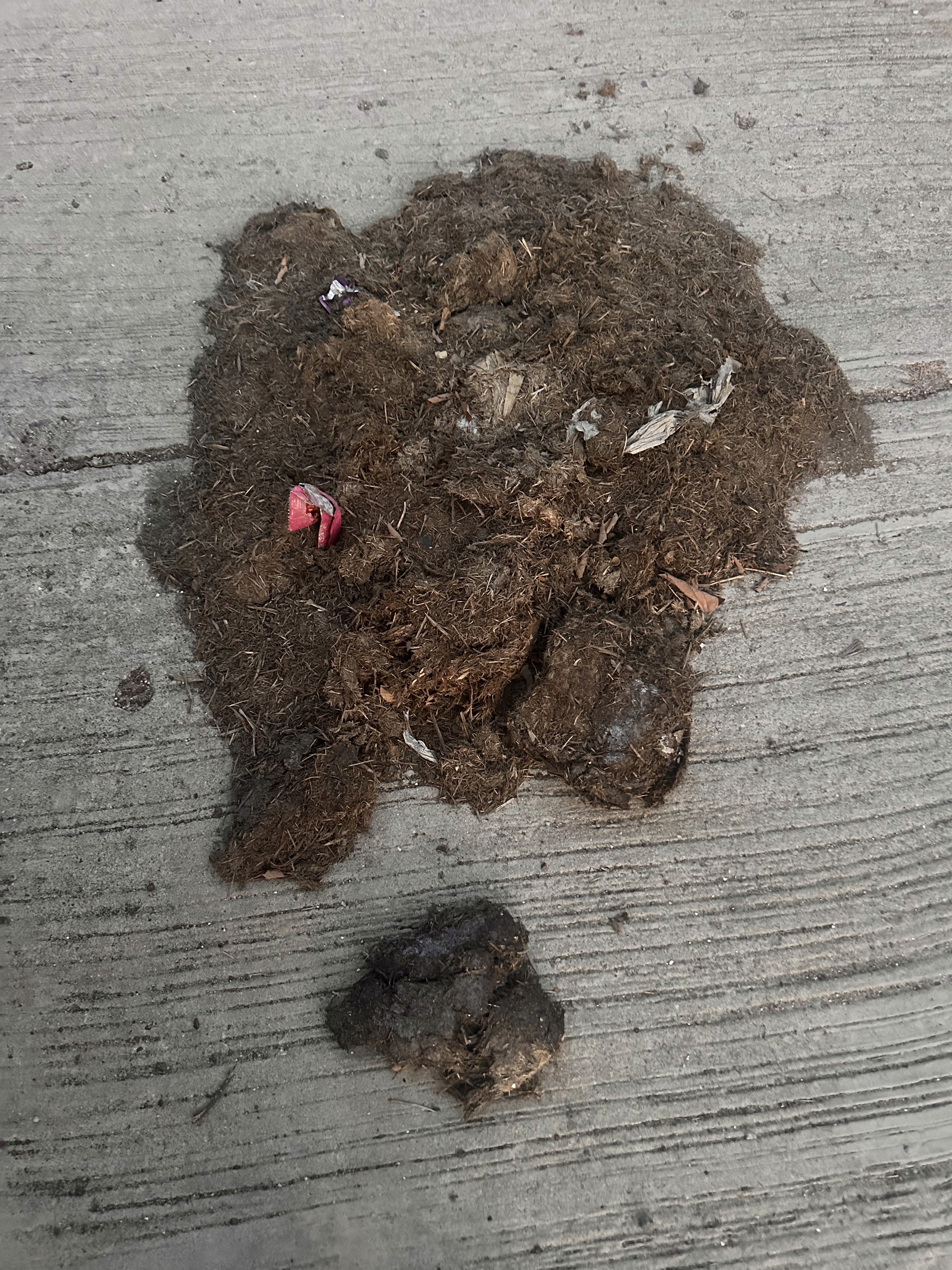
Jessie and I continued on down the sinuous path, stopping to admire the elephant tracks trod into the once wet concrete and the unnerving amount of plastic in the specie's scattered dung. We shortly arrive at a fresh high mound of upturned red soil encompassed by excavator tracks in a nearby field to the dump yard.
A burial site.
Grieving Elephants sit only 50 metres away from the grave, a heavy air hangs over us. More plastic riddled dung sits nearby, the whole setting acting as a warning to the herd, but to us humans more so.
The depressing scene is so gratefully interrupted by a local cricket match, playing only 100 metres away from the recently deceased. Laughs, calls and shouts fill the air and the heaviness lifts. The realisation of life's ceaseless continuation and evolution clouds my view of the game.






Act |||| - Hope?
The Renaissance.
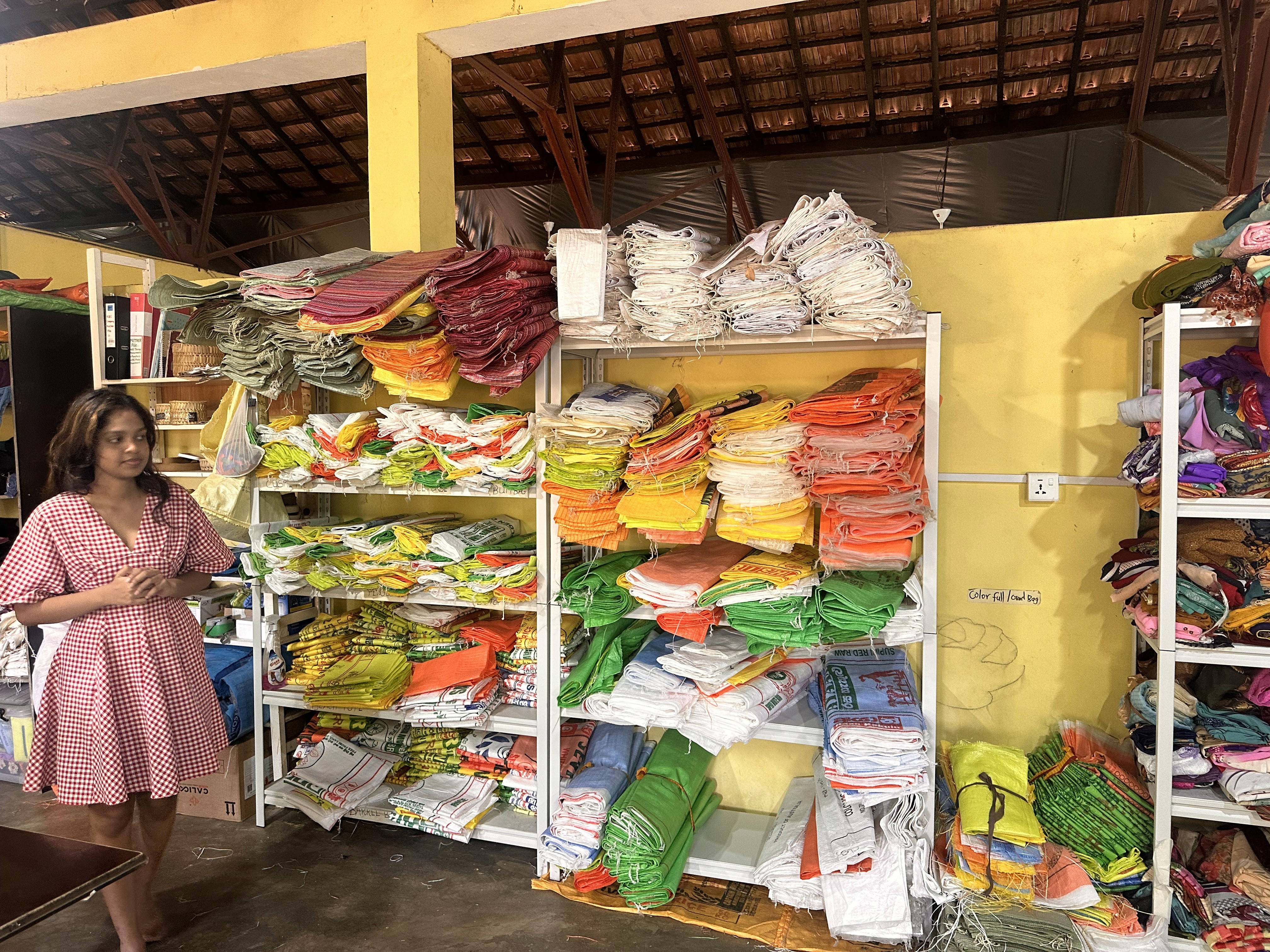
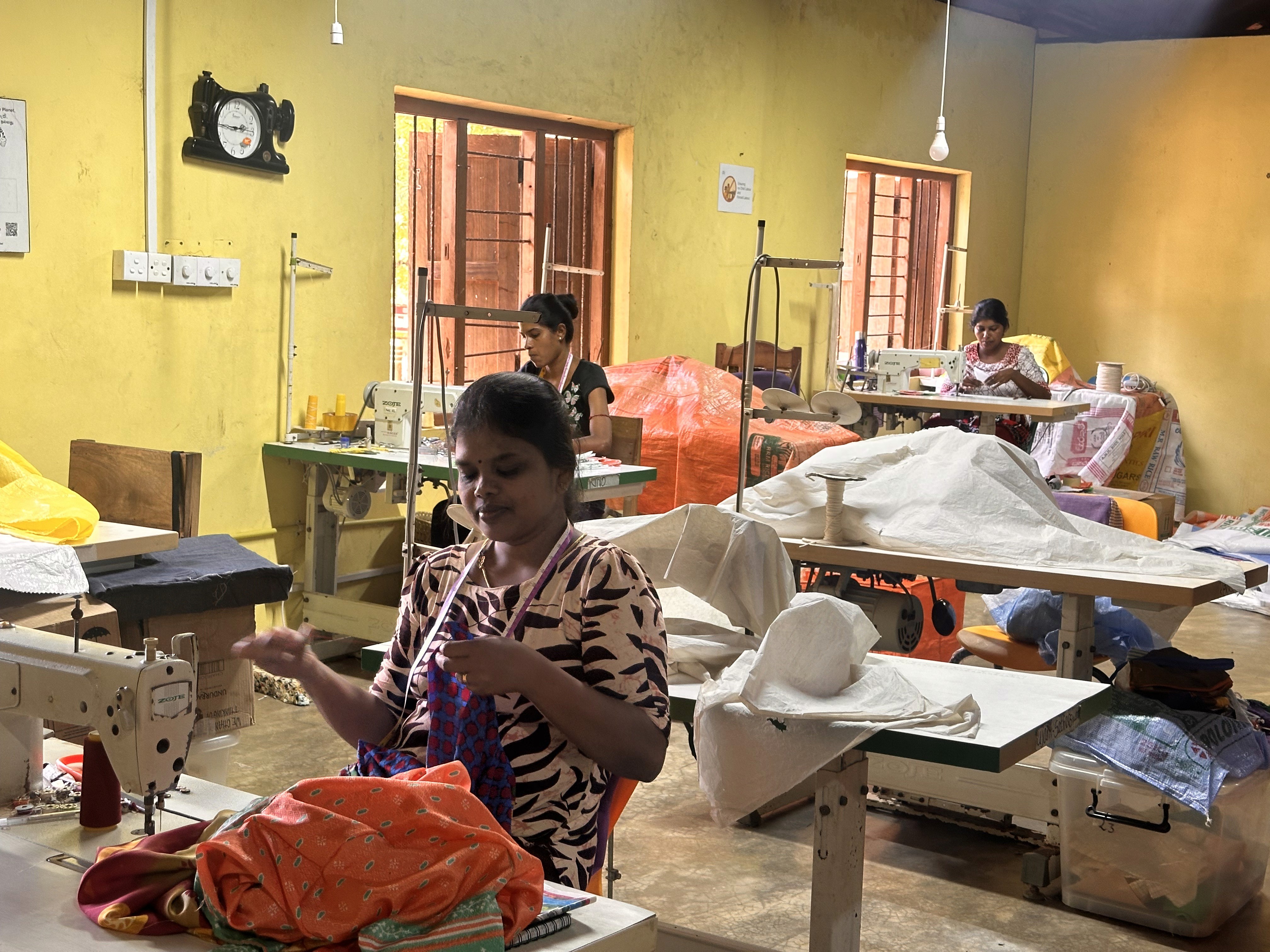
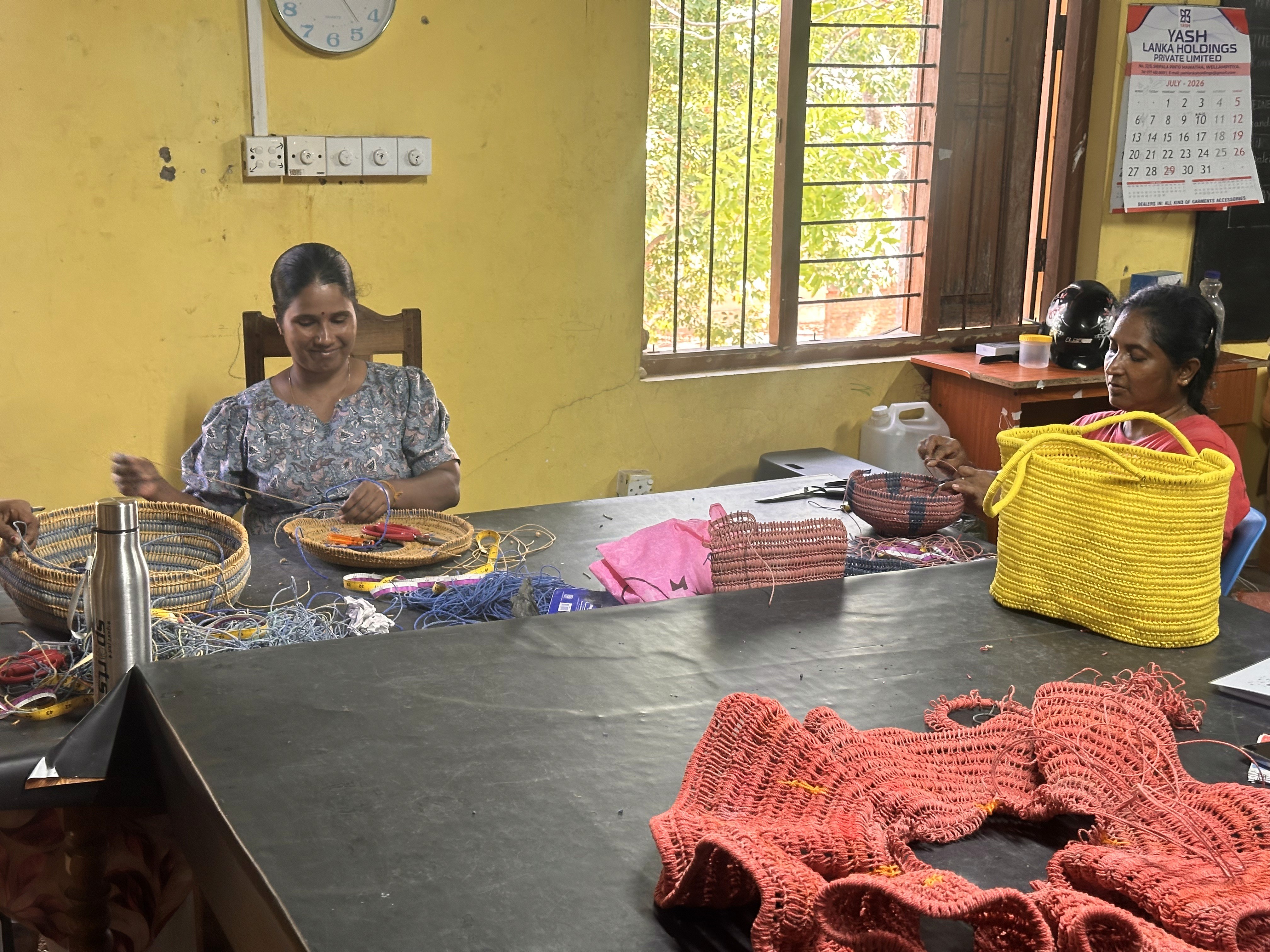
Sinyah's red blossom dress was a leading light through the workshop. With an all women workforce, you can't help but admire the tranquil atmosphere's rhythmic sounds of laughter and susurration as they fill the warehouse.
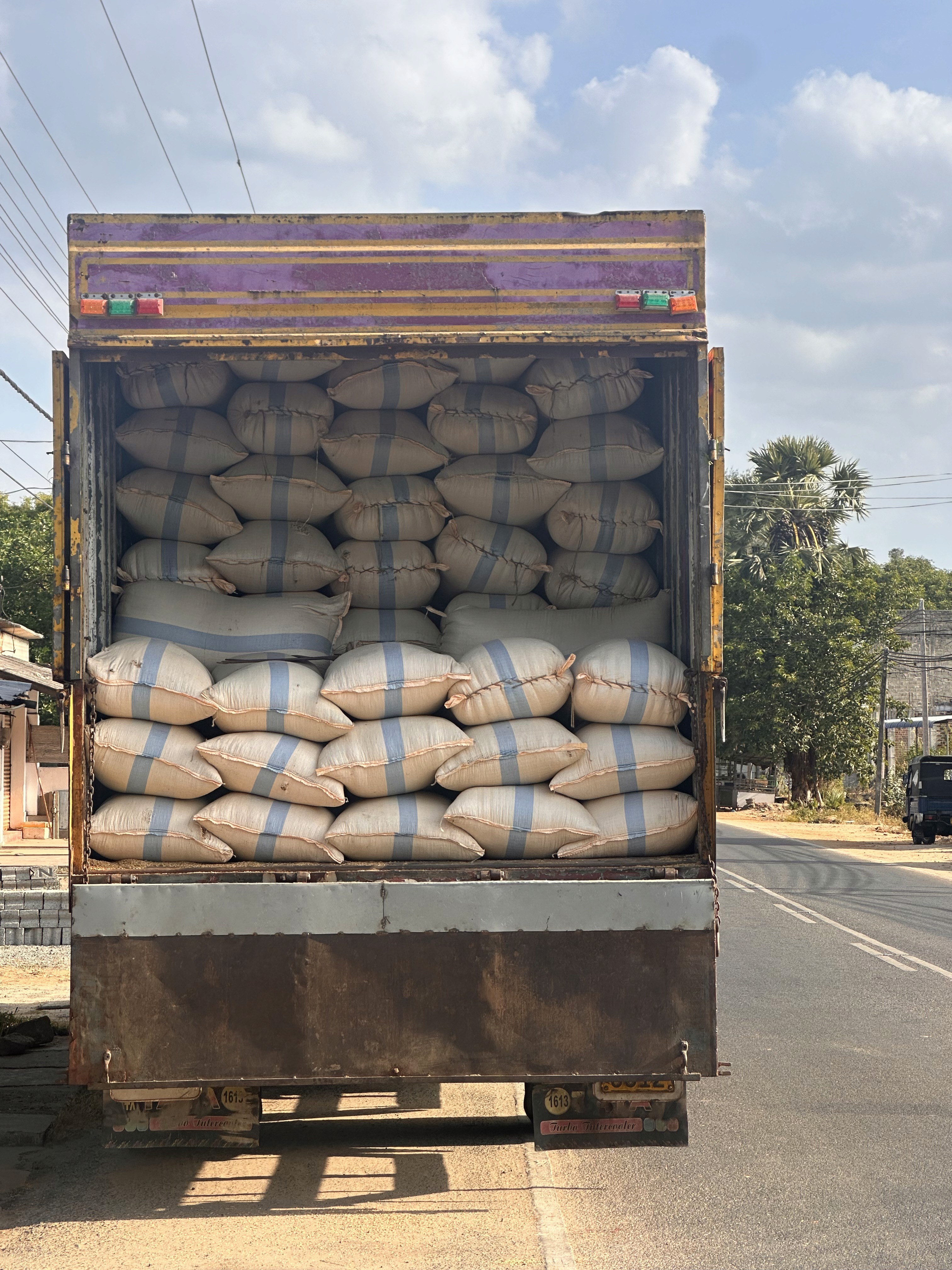
Since 2012, Rice and Carry has been one of the main driving forces on sustainability in Sri Lanka. Processing 60,000 rice bags and 120,000 plastic bottles annually, the Komari based social enterprise doesn't just push for environmental solutions but social safety also. Sinyah , working with R&C for the last 2 years, began with:
"we've done more than just solving plastic. we've solved a socio problem. It’s given women the pleasure of earning an income that is surprisingly rare in this area"
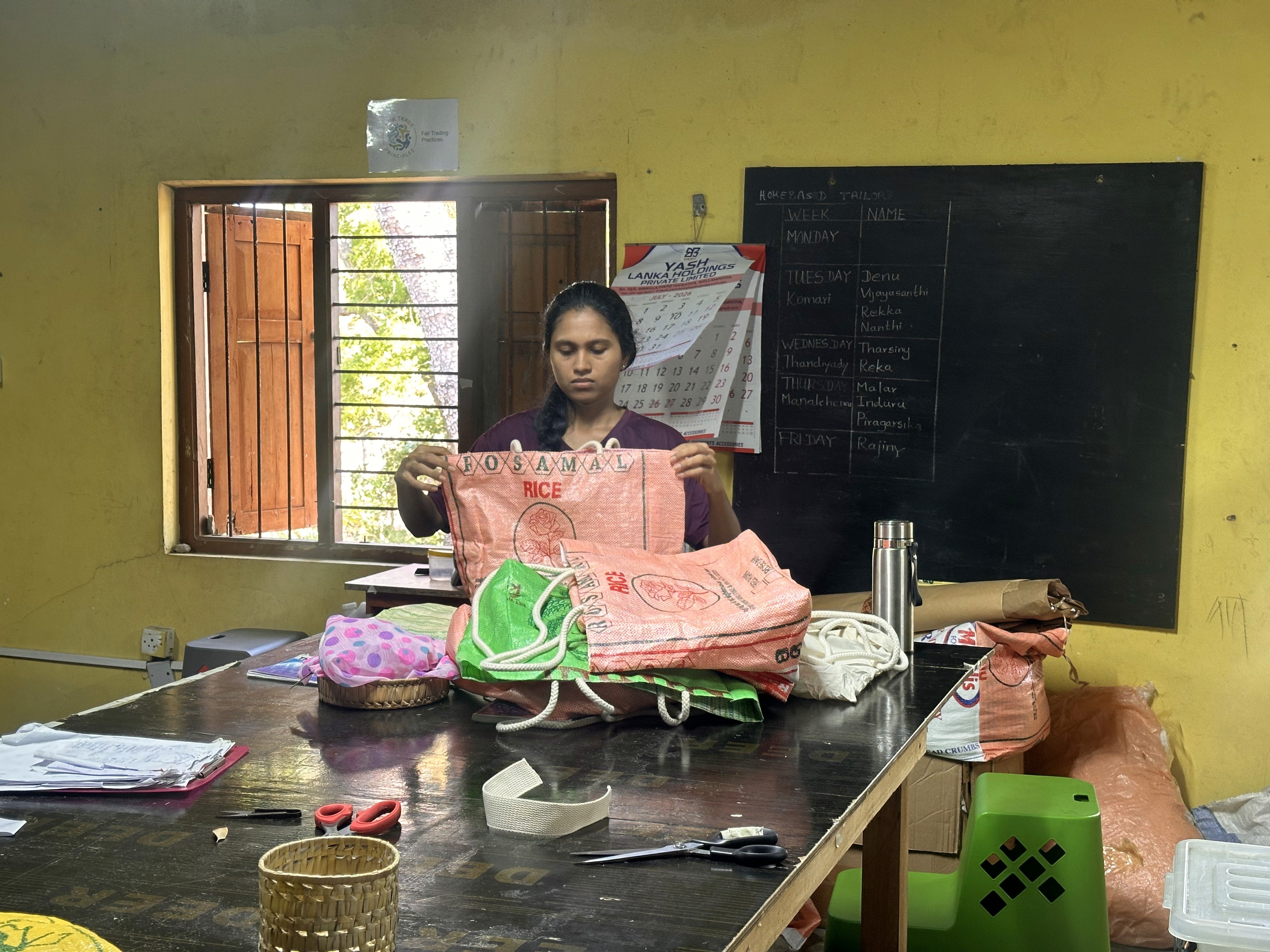
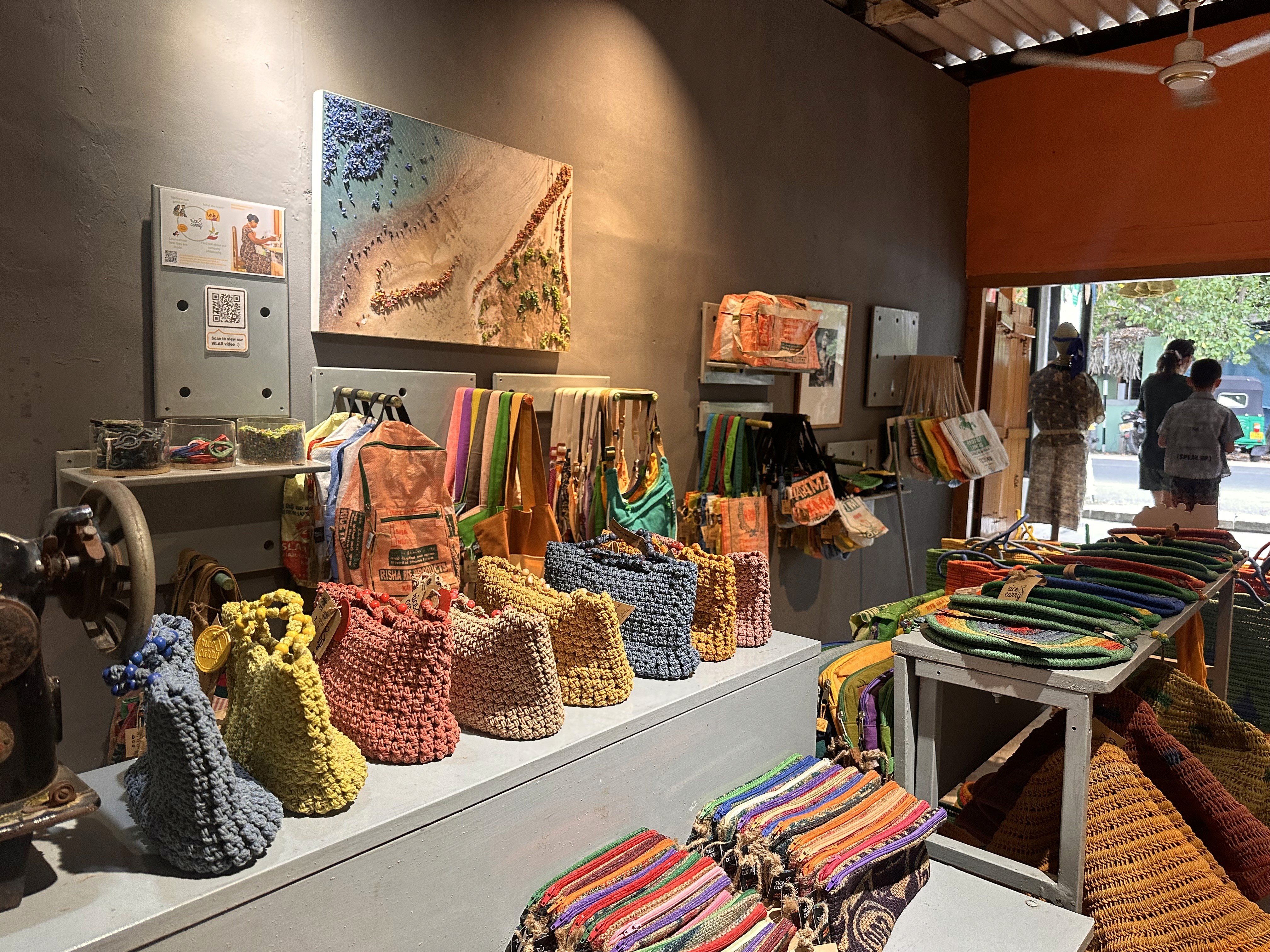
With a 80% female workforce, the company actively pursues equality in skilled employment for their 60 hard working women. Creating up cycled backpacks, beach bags, yoga mat carriers, wallets, and laptop sleeves, R&C was founded by a german couple Susie and Henry after visiting Sri Lanka 14 years ago and seeing locals using standard rice bags to carry there belongings. With no past experience, Susie took it to youtube tutorials in her hotel room; the rest is history.
"They're actually in the fight of making these things better... it’s a humble practice... it gives a lot of motivation to what you can achieve when you put your mind to it" Sinyah tells me on the German founders Susie and Henry.
The Affiliated World Fair Trade business hand washes every single rice bag and fishing net that comes through the shop with some pieces taking up to 5 days to then create. With some of the women being there since the very start in 2012, theres no doubt on the affect they bring to the community of Komari. Still equally effected by the instability of Sri Lanka as those in Arugam bay, sailing for the rocks on multiple years, with the couple onces being driven to the "point of selling a container so she could pay the checks of the ladies who worked there, to keep it alive".
Under the same umbrella of Lanka Upcycles, since 2018, Waste Less Arugan Bay (WLAB) works side by side with Rice & Carry. Collecting up to 100 kilograms of plastic a day during peak tourist season in the bay, this is grinded, melted and poured into moulds to create bag buckles, beach combs, key-rings, buttons and other small souvenir items to be sold at the Rice & Curry store front on the Arugam bay high street. They embody a circular economy as Wasith, the manager at the plastic processing workshop, began to tell me:
"Everything is used... the cut offs and flawed finished items are collected and then grinded down again. Leaving zero waste". Noting how: *"July, August, September are a hard time here... as that time more people come, using plastic bottles more"
Wasith continued to tell me about what they do during the quiet, rainy season here:
"Now we start our fishing net collection... I will buy 1 kilo for 100 rupees and bring it back"
Wasith and his colleague Fid collect, clean and press into 70kg bales what would otherwise become ghost fishing nets from fishermen just like Jenicca from earlier. To ship them to their partner, Rice and Carry or internationally to areas such as Thailand to be manufactured into safety bags. Plastic they are unable to process such as PET is crushed by a hydraulicmachine press into compact bales and sent to Colombo to make t-shirts, string and other everyday items.
One thing that surprised me was when Fid told me about there weekly beach clean:
"Believe me, all tourists, they always help with beach cleanups... but the locals they're sitting and looking... and watching what we are doing".
Is that a decision made from a lack of education, or out of shear spite?


Act |||| - Hope?
Ignorance is bliss.
The sea breeze kisses my face once more, but the comfort comes to be not as welcomed as before. As the live bands music fills my ears backed by the buzzing of young life, I can't help but be torn by what this 'paradise' costs us, costs Sri Lanka, costs the World. With countless countries affected by the same illness, this is no anomaly. Every canned beer, cupped latté or ice cream wrapper enjoyed is casted into the darkness; under the paws of dogs fighting, elephants grazing on or leaching into the groundwater all while countless fragments break apart into microplastics that return to us through the very fish we eat or the water we drink from these short lived loves.
'Paradise', I've come to discover, is not defined by what we choose to admire. It is defined by what we choose to ignore. Somewhere between the shelf and the shoreline, the story of Sri Lanka becomes the story of us all.